Earthships are self-sufficient homes made from natural and recycled materials. Their outer walls are typically fashioned from recycled tires packed with earth and coated with earthen plaster. Many designs also include indoor gardens, passive solar heating and rainwater collection systems. They've been constructed around the world, often by way of community builds and workshops focused on sustainable living and self-sufficiency.
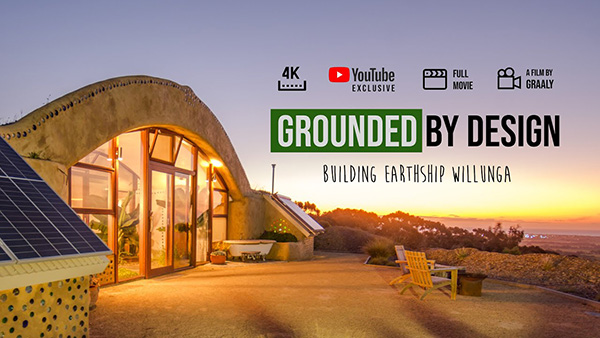
In late winter 2023, during one such workshop, more than 40 volunteers in Willunga, South Australia constructed an Earthship known as Earthship Willunga. The month-long build was documented in the YouTube film "Grounded by Design: Building Earthship Willunga," produced by Graaly, a channel documenting homestead projects and other work involving permaculture principles and repurposed materials. The film is superbly made and serves as an excellent introduction to Earthships.
More than just a record of the build, the film is also a thoughtful exploration of the knowledge, values and community spirit behind Earthship construction. Rather than merely showing volunteers stacking tires and mixing cob, the film explains the reasoning behind key design choices, from passive solar design to rainwater harvesting to the use of recycled materials. The explanations are informative, accessible and illustrated with diagrams, other visual aids and construction-site footage.
The Earthship is relatively modest in size–about 45 square meters (approximately 484 square feet)–and is designed as an "EarthBnB" with a combined living and sleeping area, a kitchenette, a greenhouse-sunroom and a small bathroom. The film estimates its cost at more than 250,000 Australian dollars. As one builder observes, Earthships are not necessarily cheaper to build than conventional homes, but they are generally less expensive to operate over the long term.
The project begins with excavating the site and laying out the footprint of the Earthship. Workers stack earth-packed tires to form the home's massive structural walls. They then install a concrete slab floor and add the structural and utility systems. These include insulation, waterproofing, drainage systems, graywater and blackwater plumbing, and septic infrastructure.
The home begins to take its final form as the crew moves on to the roof structure and finishing work. The roof is assembled elsewhere on the site from rebar and chicken wire and is then carried and lifted into position. Once secured, it is coated with ferrocement, a reinforced layer of cement and sand mortar that creates a strong structural shell. Other workers make interior walls from cob, a mixture of clay, sand, straw and water applied by hand. As the month draws to a close, a few elements, such as windows and other finishing details, are left for later crews to complete after the main build.
The construction footage is interspersed with interviews with members of the crew. These conversations shed light on the thinking behind the Earthship's unconventional construction methods and design decisions, as well as the personal motivations that draw people to Earthship builds. Volunteer Eddie says the threat of bushfires in South Australia is what first made him interested in Earthships. "It really got me thinking about long-term investment," he says, "and if we were going to build our own home, we wanted to build something resilient, energy-efficient, comfortable and beautiful."
Another volunteer, Gee, explains how the workshop's appeal extends beyond the construction itself. "It's like this lifestyle where you get up and you go down, you have breakfast with everyone," says Gee. "You work and you learn, and then you do activities together."
Indeed, there's a charm to the camaraderie that develops among the crew. We watch as volunteers bond through the shared experience of working, eating and living together over the course of a month. We chuckle as one man makes "snow angels" in a pit filled with cob that is later used to coat the tire walls.
The cinematography is beautiful. The final shot captures the Earthship bathed in golden light against a sunset sky. The film makes excellent use of time-lapse footage to help viewers visualize the site's transformation, and it links to a separate, three-minute time-lapse of the entire build for those interested in seeing the process unfold without the documentary's interviews and narration.
The documentary's main weakness is its limited critical perspective. It celebrates the benefits of Earthships but spends little time discussing maintenance issues, building code requirements, insurance concerns, or the challenges of adapting Earthship designs to different climates and regulatory environments. It also glosses over questions about the long-term environmental impacts of manufactured materials used in the project, such as polystyrene foam and concrete (as opposed to naturally occurring materials like earth and stone).
Even so, this piece succeeds as an engaging introduction to both the ideas behind Earthships and the hands-on experience of building one.
*******
If you enjoyed this review, try Dharma U. A school designed to teach permaculture through the building of it.