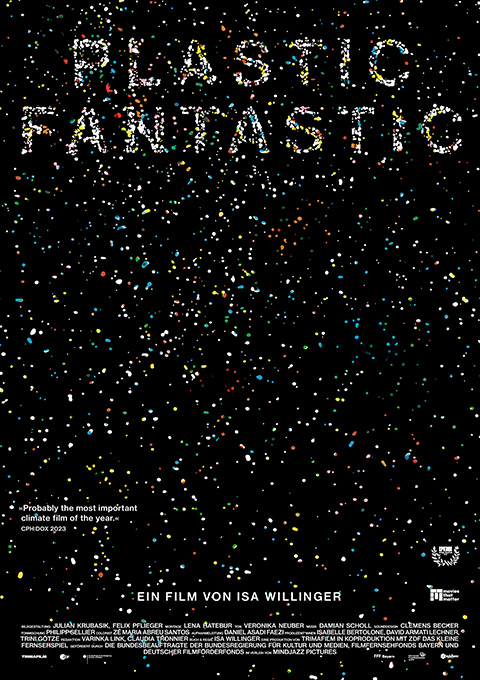
Plastic Fantastic isn't your typical "plastic is bad" documentary. It's more like an interrogation of narratives, one that alternates among several perspectives: plastic industry defenders, dissenters from within the industry, scientists and systems thinkers, and members of communities bearing the costs of plastic pollution and production. The brilliance of the film is that it lets these voices contradict one another in real time, without editorializing. It trusts the viewer to notice the disconnects.
The documentary is wide-ranging and packed with information, in the form of both interviews and visuals. We get a vivid sense of the scale of the crisis, the failings of the recycling system, the machinations and greenwashing rhetoric of the plastic industry, and how oil and gas companies are now pivoting to plastic production as part of their growth strategy.
Industry defenders are given room to speak at length. They are quick to describe all the ways in which plastic is indispensable to modern life: how it's lightweight, efficient, and crucial to food preservation, medical care, transportation and so many other sectors. They also describe at length the purported solutions to the plastic pollution crisis, from recycling to changes in consumer behavior to future technologies like chemical recycling. The film does not challenge these claims directly. Instead, it places them alongside evidence that complicates or undermines them.
Scientists and systems thinkers like Michael Braungart of Leuphana University and Sarah Jeanne Royer of the University of Hawaiʻi bring the crisis back to its roots. They explain that plastic pollution is not merely a failure of waste management, but the predictable outcome of designing materials without regard for biological systems. They emphasize how microplastics and their chemical additives accumulate in the environment and in our bodies over time. And they stress how science is still struggling to come to grips with all the ways in which these chemicals interact with living systems.
Interviews with people like Sharon Lavigne of RISE St. James, a faith-based grassroots environmental justice organization in Louisiana's petrochemical corridor, show the human side of plastic's harms. Lavigne speaks about living in what is often called "Cancer Alley," where petrochemical plants surround predominantly Black communities, where permits for new facilities and expansions are routinely granted despite community opposition, and where residents bear disproportionate health risks from industrial pollution while receiving few economic benefits. The interviews with Lavigne and others from communities disproportionately affected by plastic wastes show how plastic's benefits and harms are unevenly distributed, often along lines of race, class and geography. "We live on death row," says Lavigne. "If Formosa [Plastics] comes here, we're not going to live. Pollution will kill us."
Plastic industry dissidents provide another perspective. Former lobbyists like Lewis Freeman, of the Society of the Plastics Industry, recount how the plastics industry promoted recycling less as a solution than as a public relations strategy to forestall efforts at regulating the industry. He describes advertising campaigns designed to soft-pedal the harms of plastic and make its widespread adoption seem inevitable, even amid internal doubts about the feasibility of plastic recycling. The interviews with Freeman and other industry dissenters complicate any simple good-versus-evil narrative. They reveal a pattern of industry behavior shaped as much by institutional momentum as by individual belief.
Another recurring theme is the myth of consumer responsibility. Again and again, the film shows how individuals are blamed for plastic waste even as producers have full control over the types of plastic made and the volumes at which they're made. As the camera pans over store shelves filled with plastic-wrapped goods and disposable convenience items, we are shown visually just how limited the ability of consumers to opt out really is within the current system.
The film's visual language does much of the argument. We see plastic bales packed into underground caverns like so many drums in a radioactive waste repository. We see a stream so clogged with plastic waste that it looks like a conveyor belt of garbage. Images like these are intercut with quiet domestic scenes of former lobbyists at home, paging through old documents or talking to pets. Together, they suggest plastic as something geological, infrastructural and intimate all at once.
Another of our guides on this journey through the grim reality of plastic pollution is Kenyan photographer James Wakibia. His photographs uncover stark, unsettling scenes of animals eating plastic, waterways turned into plastic dumps and the reality of communities inundated with waste. Wakibia's conclusion is stark: "This problem of waste will not be solved by recycling. It is only possible by producing less plastic material. Enough is enough."
Plastic Fantastic is careful to acknowledge that plastic can be useful and is sometimes necessary. Medical equipment, safety gear and many other vital technologies depend on it. What the documentary questions is not plastic's existence but the scale of its production and its ubiquity, especially in the form of single-use packaging. The problem is that plastic is produced in ever-increasing volumes without accountability for its long-term consequences.
The film has a section toward the end about growing international efforts to address plastic pollution, including negotiations toward a global plastics treaty. It notes both the promise of these talks and the resistance to them from petrochemical-producing nations and industry lobbyists. The film suggests that meaningful change will require coordination beyond borders and markets, and that plastic pollution is as much a governance problem as an environmental one.
Plastic Fantastic makes great use of title cards; they're often as powerful as the film's photography and other visuals. Some of them are a lot to read, but the reading is unfailingly informative and trenchant. The first of them, right at the film's outset, reveals the blunt fact that there are "500 times more plastic particles in the oceans than stars in our galaxy." Could there be a more arresting illustration of the vast scale of the plastic crisis?
This is a timely, informative, often unsettling documentary, one whose power comes from juxtaposition rather than argument. It refuses easy villains or fixes and challenges viewers to think less about individual consumption and more about systems of responsibility. It doesn't tell us what to think, but it makes it harder to accept the stories we've been told, or to believe that the crisis of plastic can be solved through individual action alone.
*******
If you enjoyed this review, try Stella: The Mushroom Girl from Outer Space. Think Snow White meets the Hardy Boys.